
The Dawn of Machine-Scale Cybercrime
AI cybercrime is accelerating beyond human response. Learn how to survive the age of AI-driven cybercrime.
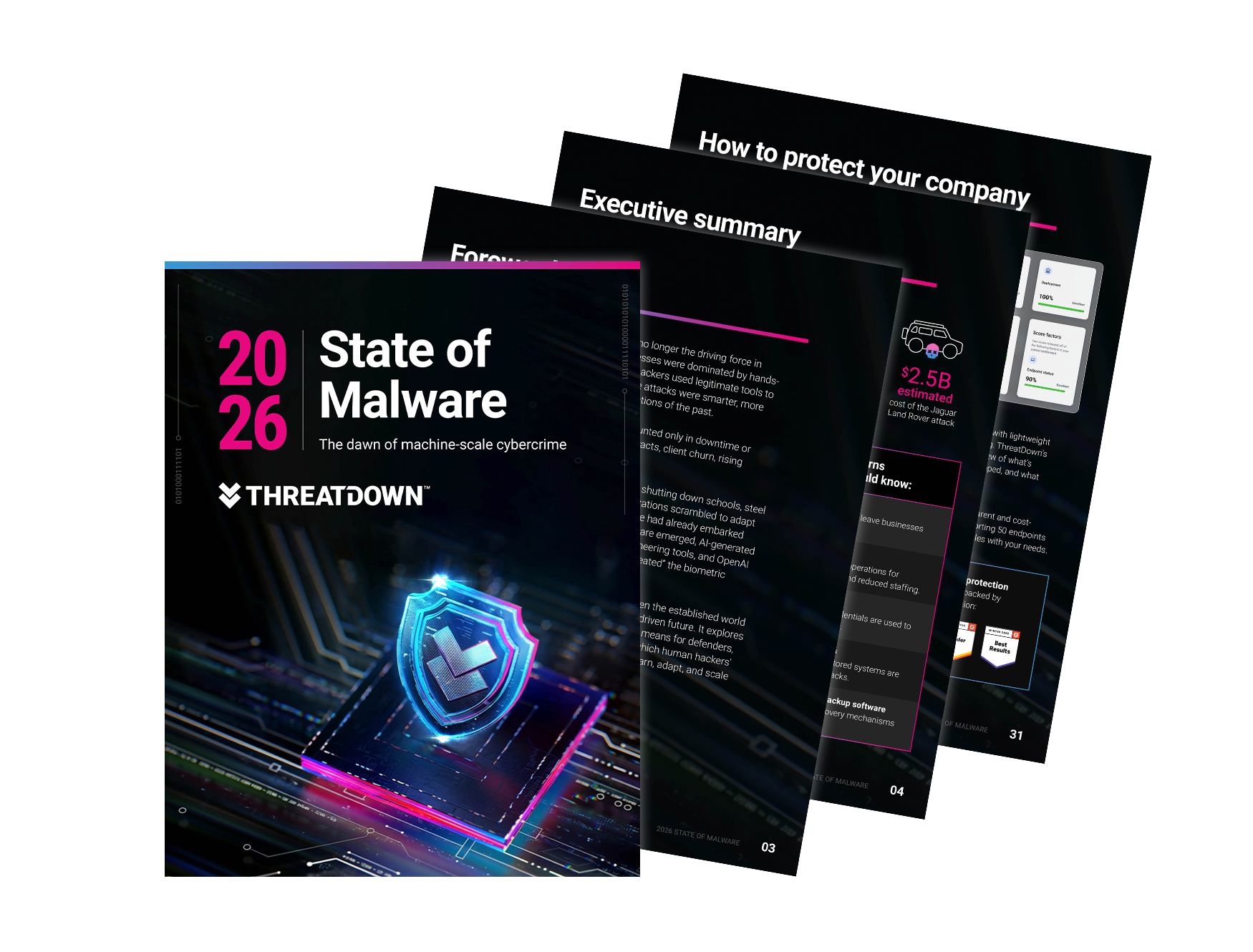
2026 State of Malware
How human-driven cybercrime is colliding with an emerging AI-driven future, and what businesses must do to survive it.
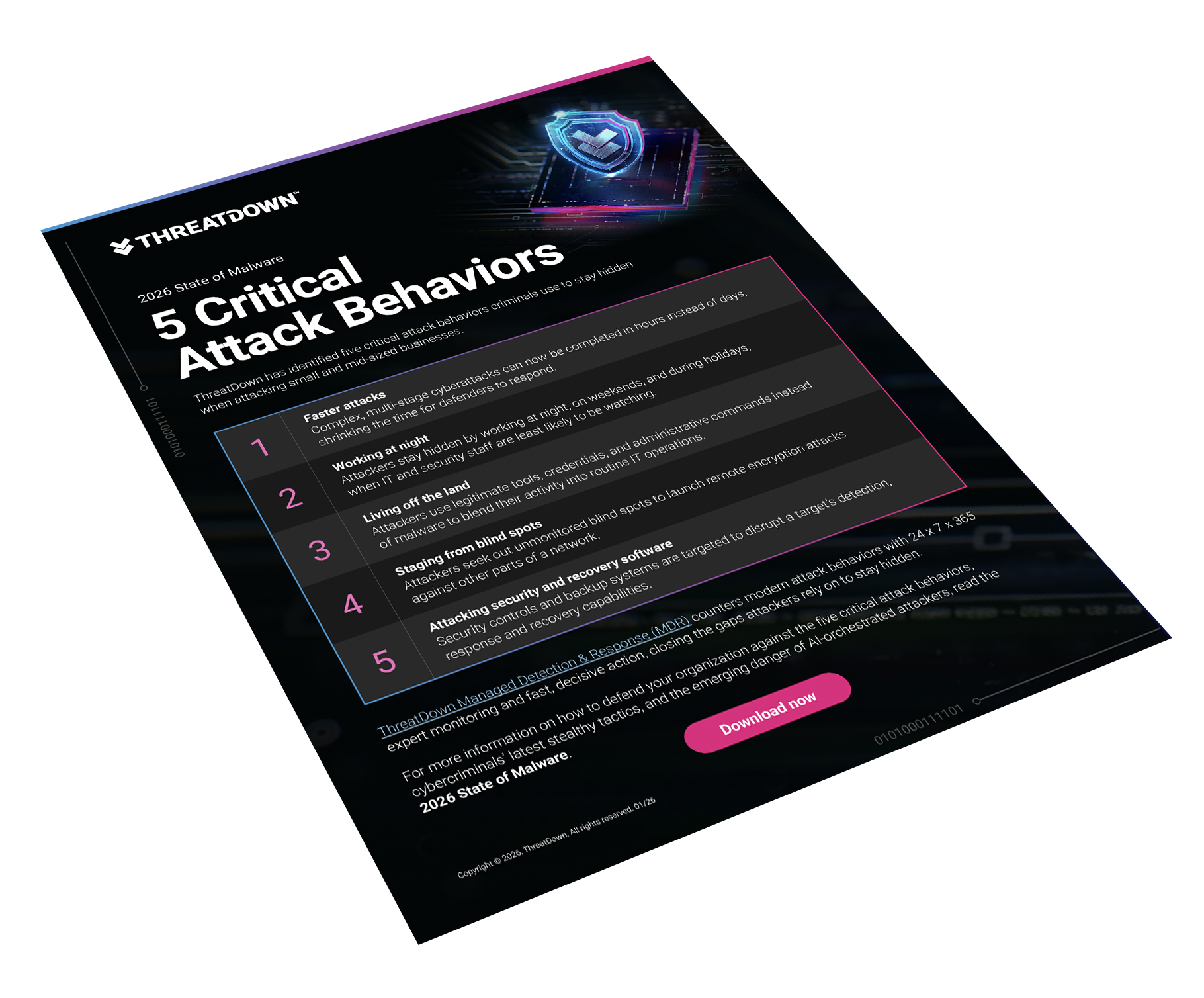
5 Critical Attack Behaviors
The five critical attack behaviors criminals use to stay hidden when attacking small and mid-sized businesses.
2026 State of Malware
Executive Summary
8%
increase
in ransomware attacks
year-over-year
86%
of ransomware attacks
are conducted
remotely
135%
countries
experienced ransomware attacks in 2025
$2.5B
estimated
economic impact of the Jaguar Land Rover attack
The threat landscape is shifting rapidly from human-driven intrusions to AI-orchestrated attacks. In 2025, attacks on businesses were dominated by stealthy, hands-on-keyboard operations that relied on legitimate tools, stolen credentials, and human decision making, with little or no traditional malware. Attackers blended into normal administrative activity, moved quickly—often at night or on weekends—and exploited blind spots such as unmanaged systems to deploy ransomware remotely. By prioritizing speed, stealth, and the disruption of security and recovery mechanisms, they left defenders with shrinking windows to detect, contain, and respond.
By the end of the year, speculation about AI in cybercrime gave way to reality. AI systems outperformed human vulnerability researchers, exploit pipelines compressed patch-to-exploit timelines to minutes, and the first confirmed cases emerged of AI agents executing complex, multi-stage compromises with minimal human oversight. Cybercrime has entered its machine-scale era. Organizations that invest in visibility, resilience, and automation now will be best positioned to keep pace with a threat landscape evolving faster than ever before.
Five operating patterns
every business should know:
1. Faster attacks
Compressed dwell times leave businesses little time to respond
2. Working at night
Threat actors time their operations for
periods of low visibility and reduced staffing.
3. Living off the land
Legitimate tools and credentials are used to
blend into normal activity
4. Staging from blind spots
Unmanaged and unmonitored systems are
used to stage remote attacks.
5. Attacking security and backup software
Security controls and recovery mechanisms
are deliberately targeted.
For more information on how to defend your organization this year, read the 2026 State of Malware
Explore More About the Latest in Cyber Threats
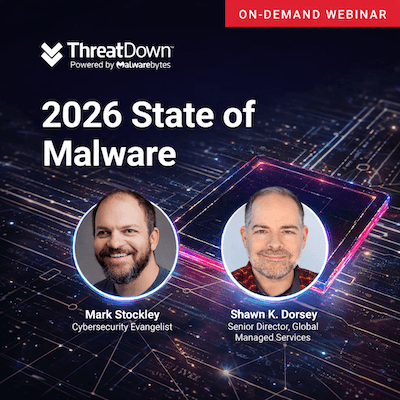
Machine-Scale Cybercrime Webinar
Human-driven cyberattacks escalated in 2025, becoming faster and stealthier as AI-powered threats like deepfakes and automated intrusions moved from theory to reality.
2026 State of Malware Quiz
Autonomous AI agents are rapidly reshaping the threat landscape, executing simultaneous hands-on-keyboard intrusions at machine scale. Take the quiz to see how well you understand this new reality.